


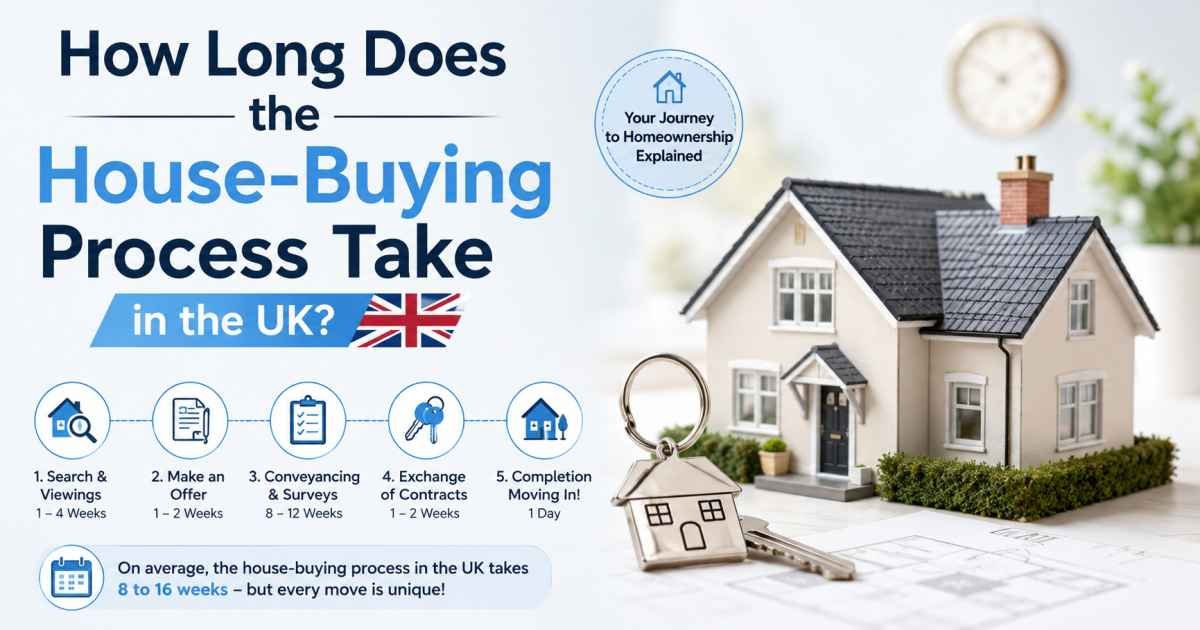
Buying a house is an exciting milestone, but it can also be a lengthy and sometimes complicated process. From having an offer accepted to receiving the keys, several important stages need to be completed before the sale can go ahead. While every property transaction is different, the average house-buying process can take several weeks or months. Working with experienced Prescot estate agents can help buyers understand the process and stay informed throughout each stage of their purchase.
How Long Does It Usually Take to Buy a House?
In the UK, the house-buying process typically takes between 12 and 20 weeks from having an offer accepted to completing the purchase. However, some transactions can be completed more quickly, while others may take longer.
The exact timeline depends on several factors, including whether you are part of a property chain, the results of surveys and searches, mortgage approval and how quickly everyone involved can complete the necessary paperwork.
Cash buyers and those purchasing a property without a chain may be able to complete the process faster. However, if multiple buyers and sellers are involved, delays at any stage of the chain can affect the entire transaction.
Understanding the different stages involved can help you prepare for the process and manage your expectations.
Step 1: Finding the Right Property
The first stage is searching for a property that meets your needs and budget. This can take anywhere from a few days to several months, depending on the local property market and the type of home you are looking for.
Once you have found a suitable property, you can make an offer through the estate agent. If the seller accepts your offer, the property will usually be marked as sold subject to contract.
At this stage, it is a good idea to begin arranging your mortgage if you have not already done so. Having a mortgage agreement in principle before making an offer can help demonstrate that you are a serious buyer.
Step 2: Instructing a Solicitor or Conveyancer
After your offer has been accepted, you will need to instruct a solicitor or conveyancer to handle the legal aspects of the purchase.
Your conveyancer will communicate with the seller’s legal representative, review important documents and carry out the necessary property searches.
They will also check the property’s title and identify any legal issues that could affect your purchase.
Choosing a solicitor or conveyancer early can help prevent unnecessary delays. You may also be asked to provide identification and other documents to allow the legal process to begin.
Step 3: Applying for a Mortgage
If you are buying with a mortgage, you will need to submit a full mortgage application to your chosen lender.
The lender will review your income, financial circumstances and credit history before deciding whether to approve your application. They may also carry out a valuation of the property to confirm that it provides suitable security for the loan.
The mortgage application process can take several weeks, particularly if the lender requires additional information or documents.
Providing accurate information and responding quickly to requests from your lender can help keep the process moving.
Step 4: Arranging Property Searches and Surveys
Your conveyancer will arrange a number of searches as part of the legal process. These may include local authority searches, environmental searches and water and drainage searches.
The purpose of these searches is to identify information that may affect the property or your future use of it.
You may also choose to arrange a property survey. While a mortgage valuation gives the lender an indication of the property’s value, it is not the same as a detailed survey of the property’s condition.
Depending on the age and condition of the property, you may choose a homebuyer survey or a more detailed building survey.
If a survey identifies significant problems, you may need to renegotiate the price with the seller or request that certain issues are addressed before the purchase proceeds.
Step 5: Receiving the Contract and Raising Enquiries
Once your conveyancer receives the contract documents from the seller’s solicitor, they will review the information and raise any necessary enquiries.
These enquiries are questions about the property that need to be answered before you can proceed.
For example, your conveyancer may request clarification about property boundaries, planning permissions, access rights or other legal matters.
The time required to resolve enquiries can vary considerably. Straightforward issues may be resolved quickly, while more complicated matters could delay the transaction.
This stage is one of the reasons why it can be difficult to predict exactly how long the house-buying process will take.
Step 6: Exchanging Contracts
Once the legal checks, searches, mortgage arrangements and other requirements have been completed, you may be ready to exchange contracts.
Before exchange, you will usually need to sign the contract and transfer your deposit to your solicitor or conveyancer.
When contracts are exchanged, the purchase becomes legally binding. At this point, a completion date is normally agreed between the buyer and seller.
It is important to avoid making major financial changes before completion, as your mortgage lender may carry out further checks before releasing the funds.
Step 7: Completion and Moving In
Completion is the final stage of the house-buying process. On the agreed completion date, your mortgage lender transfers the required funds through your solicitor or conveyancer.
Once the seller’s solicitor confirms that the money has been received, the purchase is complete.
You can then collect the keys and officially move into your new home.
The time between exchanging contracts and completion can vary. Some buyers complete on the same day as the exchange, while others agree on a gap of several days or weeks.
What Can Delay the House-Buying Process?
Several factors can cause delays when buying a property. One of the most common issues is being part of a property chain. If one buyer or seller experiences a delay, it can affect everyone else involved.
Mortgage issues can also slow down the process, particularly if additional documents or financial information are required.
Property surveys may reveal problems that need further investigation, while legal enquiries can take time to resolve.
Delays can also occur if searches take longer than expected or if buyers, sellers or their legal representatives are slow to respond to requests.
While some delays are unavoidable, staying organised and responding quickly to requests can help reduce unnecessary waiting.
How Can You Help the Process Move Faster?
Although you cannot control every part of the house-buying process, there are several steps you can take to help avoid delays.
Having a mortgage agreement in principle before making an offer can save time. You should also choose a solicitor or conveyancer promptly and provide all requested documents as quickly as possible.
If you are selling another property at the same time, keeping your own transaction moving can also help prevent delays within the property chain.
Regular communication with your mortgage lender, conveyancer and estate agent can help you stay aware of any potential issues before they become major problems.
Final Thoughts
The house-buying process in the UK typically takes several months, but the exact timeline depends on your circumstances and the complexity of the transaction. While some purchases can be completed quickly, others may take longer because of mortgage requirements, property searches, surveys or delays within a chain.
Understanding each stage of the process can make buying a home feel more manageable. By preparing your finances, responding quickly to requests and working closely with the professionals involved, you can help keep your purchase moving towards completion and look forward to receiving the keys to your new home.