


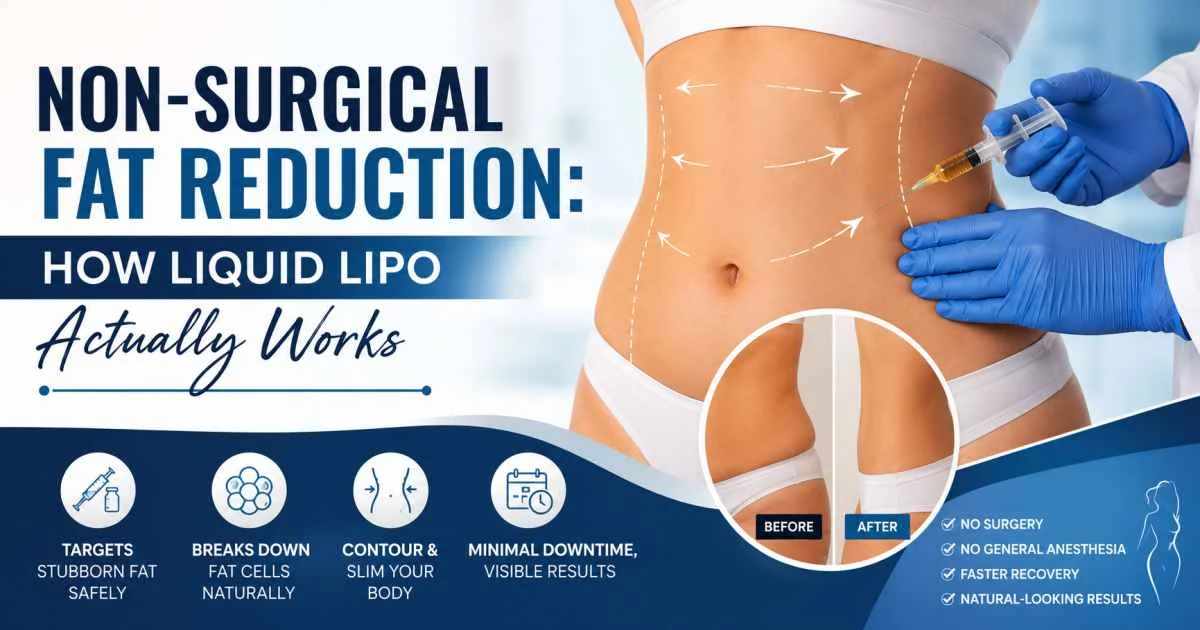
TL;DR: Liquid lipo uses small injections of deoxycholic acid, a substance the body already produces to break down fat, to permanently destroy fat cells in stubborn areas like the chin, abdomen, flanks, and thighs. Most patients need one to five short sessions and see results develop over five to twelve weeks, with only a few days of swelling.
Diet and exercise change the size of fat cells, but they cannot choose which ones shrink. That biological reality is why so many otherwise fit people carry a stubborn pocket under the chin, along the flanks, or on the inner thighs that refuses to budge. Liquid lipo treatment approaches the problem differently. Instead of shrinking fat cells, it eliminates them, using an injectable form of a compound the body already makes for exactly that purpose. Understanding the mechanism explains both why it works and why the results are considered permanent.
The Science: Deoxycholic Acid
The active ingredient in liquid lipo is deoxycholic acid, a naturally occurring molecule the digestive system uses to break down dietary fat. When a purified, synthesized version is injected into a pocket of unwanted fat, it disrupts the membranes of fat cells in the treated area. The destroyed cells are then cleared gradually by the body’s own metabolic processes over the following weeks. Because adults do not generate meaningful numbers of new fat cells, the cells removed in a treated area are gone for good, which is why the procedure is sometimes described as lipo in a syringe.
What Areas It Treats
Liquid lipo is designed for small, well-defined pockets rather than large volumes. The classic application is the double chin, where it can sharpen the jawline without surgery. Beyond the chin, providers commonly treat the upper arms, abdomen, bra rolls, flanks or love handles, inner and outer thighs, and even the knees. The unifying theme is precision. Because the product goes exactly where it is injected, a skilled provider can sculpt areas too small or too contoured for most device-based fat treatments.
What a Session Looks Like
Appointments are short, typically around thirty minutes. After mapping the treatment zone, the provider places a series of small injections using a very fine needle. Most patients describe the sensation as tiny pinches followed by about ten to fifteen minutes of mild achiness as the solution begins working. No anesthesia is required, and patients drive themselves home or back to work afterward.
The most noticeable after-effect is swelling, which is actually a sign that the treatment is doing its job. As fat cells break down, the area becomes temporarily inflamed, and that swelling generally persists for four to five days. Bruising, numbness, and tenderness in the treated area are also common and resolve on their own. Most patients plan social events at least a week out from a session, especially for chin treatment, where swelling is harder to conceal.
The Results Timeline
Liquid lipo rewards patience. Because the body clears the destroyed fat cells through natural metabolic pathways, the change unfolds gradually over five to twelve weeks rather than overnight. Most treatment plans involve one to five sessions, depending on the size of the area and the amount of fat, with a follow-up assessment around eight weeks after the final session to determine whether a touch-up is worthwhile. Photographs matter here, since gradual change is easy to underestimate when you see yourself in the mirror every day.
Who Is a Good Candidate
The ideal candidate is close to a stable, healthy weight, with localized fat pockets that have resisted diet and exercise, and generally a body mass index of thirty or less. This is body contouring, not a weight management treatment, and reputable providers are clear about that distinction. Good general health and realistic expectations round out the profile. Candidates with very loose skin in the target area may be steered toward skin-tightening options instead or in combination, since removing fat beneath lax skin can make laxity more visible.
How It Compares to Other Fat Reduction Options
Surgical liposuction removes larger volumes in a single procedure but involves anesthesia, incisions, and genuine recovery time. Device-based treatments like fat freezing work well for broader zones but are less precise on small or curved areas. Injection-based treatment occupies the precision end of the spectrum: minimal downtime, no incisions, and millimeter-level control, at the cost of needing multiple sessions for larger areas. Clinics offering LiquidLipo near Minneapolis often pair it with complementary treatments, such as skin tightening or laser resurfacing, to refine the final contour once the fat reduction settles.
Aftercare Essentials
Aftercare is simple but specific. Patients are advised to avoid hot tubs, saunas, and intense exercise for twenty-four hours, and to skip anti-inflammatory medications like ibuprofen for a week after treatment, since the inflammatory response is part of how the treatment works. Blood-thinning supplements and medications are usually paused before the appointment when medically appropriate to limit bruising, and topical arnica can speed the fading of any bruises that do appear.
Common Questions
Is the treatment painful? Most patients feel small pinches and a brief period of aching, manageable enough that no anesthesia is needed. When will I see results? Expect a gradual change from around week five, with the full result by week twelve after the final session. Is there an age limit? No specific range applies, as candidacy rests on health, skin quality, and expectations rather than age. What happens if I gain weight later? The destroyed fat cells do not return, but remaining cells elsewhere can still enlarge, so results hold best alongside a stable lifestyle. These are exactly the points a consultation works through before any treatment is scheduled.
The Takeaway
For small, stubborn fat pockets, fat dissolving injections offer something genuinely useful: permanent fat cell removal with no operating room, no anesthesia, and downtime measured in days of swelling rather than weeks of recovery. The key variables are candidacy and provider skill, both of which get sorted out in a proper consultation. For the right patient, it is one of the most efficient routes to a sharper, more sculpted contour.