


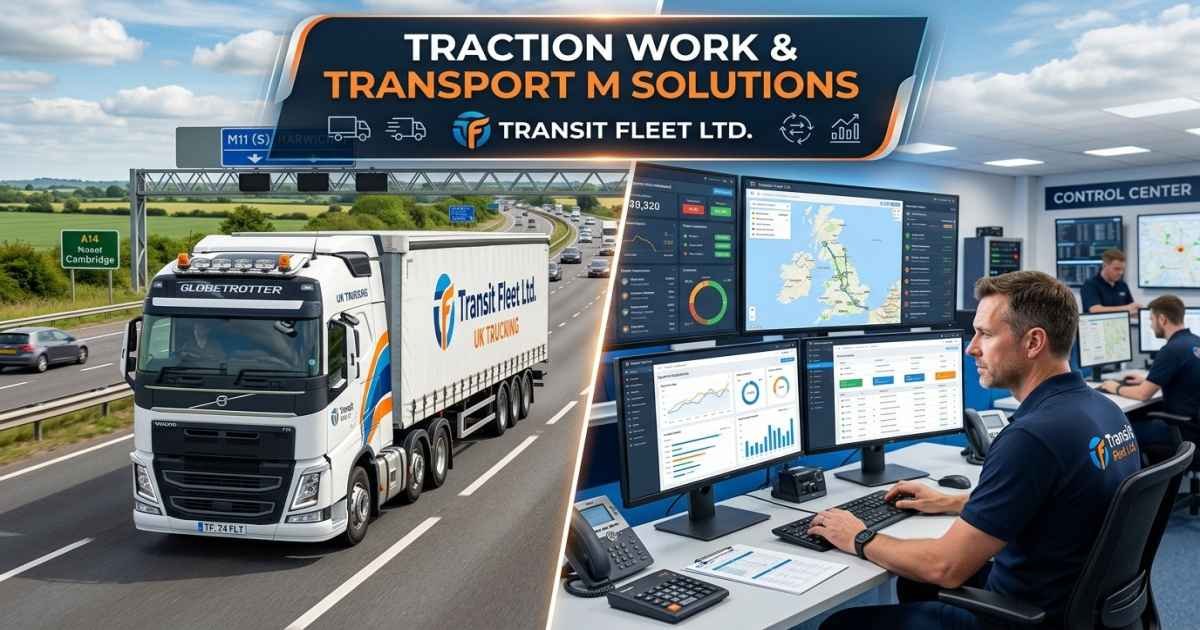
Traction work is one of the quiet workhorses of the UK road transport industry. It lets haulage companies, freight operators, manufacturers, retailers and logistics providers move goods without having to own and run a complete fleet themselves. For owner drivers and smaller transport businesses, good transport management is often what turns this work from a hustle into something efficient, profitable and properly compliant.
At its core, professional transport management is about coordination – drivers, vehicles, routes, schedules, paperwork and customer needs all pulled into one system, rather than juggled separately. Done well, it cuts delays, keeps costs down, gets more out of each vehicle, and keeps journeys running safely and within the law.
Road freight isn’t a niche corner of the UK economy either. The Department for Transport recorded 152 billion tonne kilometres of goods moved by HGVs in Great Britain in 2024 – a figure that gives some sense of just how much is riding on this sector working smoothly.
This article looks at what traction work actually involves, why management matters so much to it, and how transport management companies help operators run a tighter, more reliable operation.
What Is Traction Work?
Traction work is a form of haulage where a driver or operator supplies the vehicle and the driving, but not necessarily the trailer. Instead, a haulage company, logistics provider or freight forwarder owns the trailer and brings in a traction operator to move it from A to B.
It’s a useful arrangement because it means businesses don’t need to own a full fleet of vehicle-and-trailer combinations just to cover peaks in demand. When more capacity is needed, they bring in traction operators rather than buying more kit.
For owner drivers, it can mean something just as valuable: steady work, without having to chase down a new load for every single journey.
Traction work commonly covers things like:
- Collecting and delivering trailers
- Moving freight between depots
- Supporting wider distribution networks
- Regional or long-distance runs
- Absorbing extra transport demand at short notice
- Shifting trailers between ports, warehouses and customer sites
What that looks like day to day depends heavily on the operator, the contract, the vehicle, and what the customer needs.
Why Management Matters Here
Traction work can look deceptively simple from the outside – pick up a trailer, drop it off, repeat. In practice, running several of these journeys at once gets complicated fast. Drivers need clear instructions. Vehicles need to be in the right place at the right time. Routes need planning. And there’s a constant backdrop of legal requirements that can’t be ignored.
A proper transport management system ties all of that together instead of leaving each piece to be handled on its own, which is where communication tends to break down.
Take a fairly ordinary scenario: a trailer is due at a depot, and a driver needs to be there to collect it. The transport manager isn’t just thinking about the pickup – they’re checking the driver’s hours, where the vehicle currently is, the route, the delivery window, and any special instructions attached to the job. Miss one of those details and you’re looking at waiting time, a missed delivery slot, wasted fuel, or a knock-on delay somewhere further down the chain.
Where Professional Transport Management Actually Helps
1. Smarter Scheduling of Drivers and Vehicles
Scheduling is probably where good transport management earns its keep the most.
Traction operators are often juggling several jobs across a week, and without careful planning, drivers end up either sitting idle between jobs or driving long distances with nothing productive to show for it.
A good transport manager plans around driver availability, where the vehicle actually is, and what the customer needs – not just what’s next on a list. If a driver wraps up a job in Birmingham, for example, the next assignment can be planned nearby rather than sending them halfway across the country empty.
That kind of planning adds up: better vehicle use and less wasted mileage over time.
| Transport management task | What it does for traction work |
| Driver scheduling | Cuts down on downtime |
| Route planning | Keeps mileage and fuel costs in check |
| Job allocation | Matches the right driver to the right job |
| Vehicle planning | Gets more out of the fleet |
| Delivery coordination | Fewer missed time slots |
| Compliance checks | Keeps operations safer and legal |
2. Keeping Drivers Compliant
Compliance isn’t optional in UK road transport – it’s the backbone of the whole industry. HGV operators and drivers have to work within rules on drivers’ hours, working time, vehicle safety, operator licensing and tachographs.
For a traction operator managing customers, vehicles and paperwork all at once, staying on top of every one of these requirements is genuinely hard. That’s where an extra layer of oversight helps.
A transport manager can spot potential issues in a schedule before they become real problems, and build jobs around legal driving and rest requirements from the outset. Skip this step and you end up putting unnecessary pressure on drivers – which is exactly how compliance breaches happen.
3. Cutting Down Empty Running
Empty running is when a vehicle travels without doing any productive work – still burning fuel, wearing tyres and using up road time, but earning nothing.
It’s a real cost, and better planning is the main way to keep it under control. After a trailer is dropped off, for instance, a well-run operation can often line up the next job somewhere close to the driver’s current location instead of sending them back empty.
That said, some repositioning is unavoidable – you’re never going to eliminate empty running entirely. But sharper planning can shrink it considerably.
4. Keeping Communication Tight
Traction work runs on information. Drivers need to know things like:
- Collection and delivery locations
- Trailer numbers
- Contact details
- Delivery windows
- Site-specific instructions
- Any last-minute changes to the job
- Loading and unloading requirements
When that information doesn’t flow properly, drivers turn up at the wrong place or sit waiting for someone to tell them what’s next.
A good transport manager becomes the single point of contact between driver and customer. If a delivery time shifts, the driver hears about it straight away. If a customer moves the collection point, the driver knows before they’ve driven anywhere near the old one. Small thing, but it saves a lot of wasted time and avoidable mistakes.
Cost Control Comes From Planning, Not Cutting Corners
Fuel is one of the biggest costs any road transport business carries. Government road freight statistics confirm what most people in the industry already know – HGVs are central to how goods move around the UK, which means even modest efficiency gains add up fast across thousands of journeys.
| Cost area | How management helps |
| Fuel | Better route and journey planning |
| Driver time | Tighter job scheduling |
| Vehicle wear | Less unnecessary mileage |
| Downtime | Better use of available work |
| Admin | Centralised records and paperwork |
| Delays | Faster communication when things change |
Controlling costs isn’t about spending less for the sake of it – it’s about squeezing more value out of what you’ve already got, without letting service or compliance slip.
Technology’s Role – and Its Limits
Technology has genuinely changed how transport businesses run day to day. GPS and vehicle tracking show where every vehicle is in real time. Digital tachograph data helps monitor driving and rest periods. Transport management software keeps jobs and records organised in one place instead of scattered across spreadsheets and phone calls.
But tools only go so far. A tracking system can tell you a vehicle is late – it can’t tell you why, or what to do about it. That still takes an experienced transport manager reading the situation and making a call. Technology and good people work best together, not as a substitute for one another.
What This Means for Owner Drivers
Owner drivers are a vital part of UK haulage, running their own vehicles and often working alongside logistics companies and larger haulage firms. But owning and driving the vehicle is only part of the job – there’s also customers, paperwork, maintenance, fuel costs, route planning, compliance and simply finding enough work to stay busy.
That’s a lot to carry alone. Working with an established transport management operation for traction work for owner drivers UK can take a good chunk of that pressure off, giving drivers access to organised jobs with clear requirements – so they can spend more time actually driving and less time on admin.
Why Transport Management Companies Are Worth Using
Transport management companies bring specialist knowledge that a lot of smaller operators simply don’t have in-house – planning operations, managing drivers, coordinating vehicles, staying on top of compliance, and handling customer communication.
That’s particularly valuable when demand spikes seasonally or a business suddenly needs more capacity. Rather than scaling up an internal team overnight, businesses can lean on professional transport management to cover the gap.
The value isn’t just getting goods from one place to another – it’s making sure the whole process holds together while that happens.
Transit Fleet and Transport Services in the UK
Transit Fleet provides transport services across the UK, supporting businesses that need dependable transport solutions for their logistics and haulage operations – with a focus on efficiency, clear communication, compliance and reliable service.
For businesses relying on traction work, having a solid transport partner makes it far easier to coordinate drivers, vehicles, trailers, collections and deliveries – and to respond when demand shifts, without putting unnecessary strain on internal teams.
Where Traction Work Is Headed
The UK’s logistics sector isn’t standing still – customer expectations, operating costs, driver availability, technology and environmental rules are all shifting at once. The Road Haulage Association continues to underline how central road freight is to the wider economy, and government figures keep showing just how much freight moves by HGV every year.
All of which makes efficient transport management more important, not less. Businesses still need goods delivered on time, costs kept under control, and legal requirements met – while owner drivers and traction operators need steady work, sensible routes and communication they can rely on. Good management is what connects those two sets of needs.
As digital tracking and data-driven planning keep developing, there’s more room for operators to sharpen their efficiency further. But the fundamentals aren’t going anywhere: solid planning, clear communication, legal compliance, reliable vehicles, and people who know what they’re doing.
Conclusion
Professional transport management is doing more work behind the scenes of UK traction operations than most people realise – coordinating drivers, vehicles, trailers, routes, schedules, compliance and customer needs into something that actually runs smoothly.
For owner drivers, it means better-organised work and a lot less admin to carry alone. For haulage and logistics companies, it means better vehicle use, less wasted mileage, tighter costs, and a service customers can count on.
With UK road freight moving such huge volumes of goods every year, solid transport management isn’t a nice-to-have – it’s what keeps the supply chain functioning. Bring together experienced people, reliable drivers, careful planning and the right technology, and traction operations become genuinely more efficient and dependable – freeing businesses up to focus on their customers rather than firefighting logistics.
Frequently Asked Questions
What is traction work in the UK? It’s haulage where a driver or operator supplies the vehicle and driving, moving a customer’s trailer or freight – often without owning the trailer itself.
How does transport management support traction work? By organising drivers, vehicles, routes, schedules, compliance and communication in one place, which cuts delays and gets more out of every vehicle.
Is traction work suitable for owner drivers? Yes – it can offer regular work without needing to chase a new load for every trip, though what’s available depends on contracts and customer demand.
How can transport management reduce costs? Mainly by cutting unnecessary mileage, tightening job scheduling, reducing downtime and planning routes more sensibly – all of which feed into lower fuel, vehicle and driver costs.
Why does compliance matter so much in UK traction work? Because HGV operations are governed by strict rules on drivers’ hours, rest periods, tachographs, vehicle safety and operator licensing – and good management builds jobs around those requirements rather than around them.