


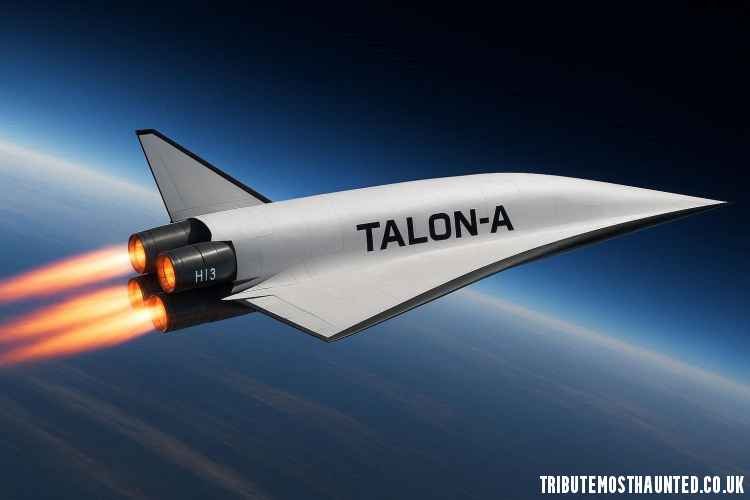
H13 Engines Hypersonic Vehicle Talon-A: The Talon-A hypersonic vehicle and Ursa Major’s Hadley H13 rocket engine are transforming the future of reusable hypersonic flight in 2026. Developed by Stratolaunch and powered by upgraded H13 engines, Talon-A became the first privately funded reusable hypersonic test vehicle to achieve sustained Mach 5+ speeds and successfully return for recovery.
As the global race for hypersonic dominance accelerates between the United States, China, and Russia, the Talon-A and H13 combination is emerging as one of the most important aerospace breakthroughs of the decade. From military testing and missile defense research to commercial payload experimentation, this next-generation system is dramatically lowering the cost of hypersonic development.
Here’s the complete 2026 guide to H13 engines, Talon-A hypersonic flights, Stratolaunch testing, Mach 5+ technology, and the future of reusable hypersonics.
What Is Talon-A? The Reusable Hypersonic Test Vehicle

Talon-A is a reusable, rocket-powered, air-launched hypersonic vehicle created by Stratolaunch. It was specifically designed to test military and commercial payloads at speeds greater than Mach 5, which is more than five times the speed of sound.
Unlike traditional hypersonic systems that are often expendable and extremely expensive, Talon-A focuses on reusability, rapid turnaround, and affordable testing.
Key Talon-A Specifications 2026
| Feature | Details |
|---|---|
| Vehicle Type | Reusable hypersonic test vehicle |
| Developer | Stratolaunch |
| Launch Platform | Roc carrier aircraft |
| Speed | Mach 5+ |
| Flight Type | Air-launched |
| Recovery | Runway landing |
| Purpose | Defense & commercial hypersonic testing |
The vehicle launches from Roc, the world’s largest airplane with an enormous 385-foot wingspan. After release, Talon-A ignites its rocket engine and accelerates into sustained hypersonic flight.
The first powered Talon-A flight occurred on March 9, 2024, and successful reusable missions continued throughout 2025 and 2026.
What Is the H13 Engine? Ursa Major’s Hadley Upgrade
The Hadley H13 engine is an upgraded liquid rocket propulsion system developed by Ursa Major specifically for Stratolaunch’s Talon-A platform.
The H13 is an advanced version of the original Hadley engine, engineered for improved reusability, reliability, and mission flexibility.
H13 Engine Specifications 2026
| Specification | Details |
|---|---|
| Engine Name | Hadley H13 |
| Manufacturer | Ursa Major |
| Thrust (Sea Level) | 5,000 lbf |
| Vacuum Thrust | Up to 6,500 lbf |
| Fuel | Kerosene |
| Oxidizer | Liquid Oxygen (LOX) |
| Engine Cycle | Oxygen-rich staged combustion |
| Manufacturing | 80% additive manufacturing |
One of the H13 engine’s most important upgrades is its ability to perform multiple restarts, enabling significantly more reusable missions compared to earlier variants.
Chris Spagnoletti, President of Liquid Systems at Ursa Major, said:
“This version increases engine reusability with additional starts, driving down cost per flight while supporting new test objectives and mission profiles.”
The $32.9 Million H13 Contract Explained
In 2026, Ursa Major secured a major $32.9 million contract to deliver 16 upgraded Hadley H13 engines to Stratolaunch.
This agreement represents a huge step forward for private hypersonic infrastructure in the United States.
Why the Contract Matters
1. Lower Flight Costs
Reusable engines dramatically reduce testing expenses compared to traditional one-time-use systems.
2. Faster Testing Cadence
Stratolaunch aims for monthly hypersonic test flights, something previously impossible due to extreme costs.
3. Stronger U.S. Defense Infrastructure
The project strengthens American hypersonic capabilities amid increasing competition from China and Russia.
4. Expanded Mission Profiles
The upgraded H13 supports new payloads, advanced sensors, and missile-defense experiments.
Ursa Major CEO Dan Jablonsky stated:
“We’re focused on getting real capability into the field faster, at scale, and without compromising performance.”
Talon-A Flight History: Mach 5+ Milestones
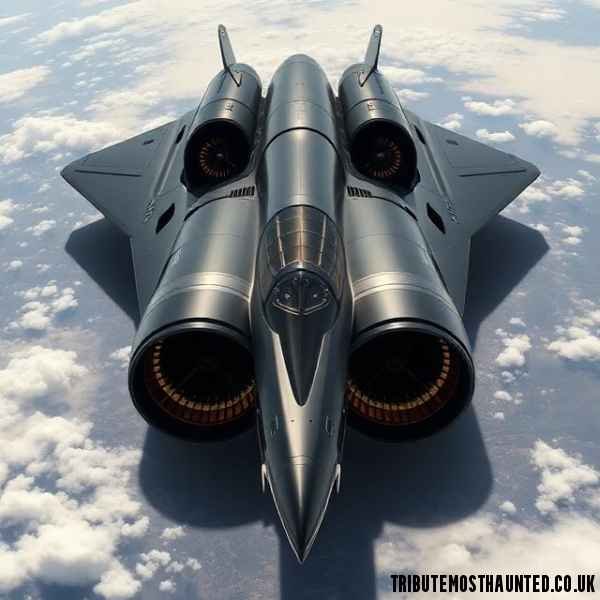
The Talon-A program has achieved several historic milestones between 2024 and 2026.
March 9, 2024 — First Powered Flight
The first Talon-A mission successfully achieved high supersonic speeds approaching Mach 5 over the California coast.
December 2024 — Talon-A2 Hypersonic Success
Talon-A2 exceeded Mach 5 and completed a successful runway landing.
March 2025 — Second Reusable Hypersonic Flight
The vehicle again achieved sustained hypersonic speeds and safely returned to Vandenberg Space Force Base.
These missions proved that reusable hypersonic flight is no longer theoretical — it is operational reality.
The Talon-A system became:
- The first privately funded reusable hypersonic test vehicle
- The first American-made propulsion system of its type to sustain Mach 5+ and return
- A major breakthrough in low-cost hypersonic testing
How H13 Engines Achieve Mach 5+ Hypersonic Flight
Hypersonic flight begins at Mach 5, approximately 3,853 miles per hour.
At these speeds:
- Air becomes ionized into plasma
- Temperatures rise dramatically
- Communications become difficult
- Control surfaces face intense pressure
The H13 engine addresses these challenges using advanced propulsion engineering.
Key Technical Advantages
Oxygen-Rich Staged Combustion
This engine cycle provides:
- Higher efficiency
- Greater power output
- Cleaner combustion
Advanced Heat-Resistant Materials
Specialized metals allow the engine to survive:
- Extreme temperatures
- High chamber pressures
- Violent shock waves
80% Additive Manufacturing
The engine is mostly 3D printed, allowing:
- Faster upgrades
- Fewer parts
- Lower failure risk
- Rapid production scaling
Multiple Engine Restarts
The upgraded H13 supports additional starts for repeated missions and reusable operations.
Talon-A vs Traditional Hypersonic Vehicles
Most traditional hypersonic systems are extremely expensive and disposable. Talon-A changes that model entirely.
| Vehicle Type | Reusable | Speed | Cost Efficiency |
|---|---|---|---|
| Talon-A | Yes | Mach 5+ | High |
| Ballistic Systems | No | Mach 20+ | Low |
| Boost-Glide Vehicles | No | Mach 5+ | Moderate |
Why Talon-A Stands Out
Affordable Testing
Traditional Department of Defense hypersonic tests can exceed $100 million per flight.
Rapid Turnaround
Reusable systems allow much faster testing schedules.
Flexible Payload Testing
The platform supports military, commercial, and research missions.
This combination makes Talon-A one of the most practical hypersonic systems ever built.
Why H13 & Talon-A Matter for U.S. Defense
Hypersonic weapons are considered one of the most important military technologies of the modern era.
Their speed allows them to:
- Evade missile defenses
- Reduce enemy reaction time
- Deliver payloads rapidly
Talon-A’s Military Role
The system helps the Pentagon:
- Test hypersonic sensors
- Validate communication systems
- Improve missile defense technologies
- Study materials under hypersonic conditions
Defense experts frequently repeat one major concern:
“The first time our military sees a hypersonic threat should not be during combat.”
The Talon-A platform gives the U.S. a reusable environment for realistic hypersonic testing.
H13 Manufacturing: The Power of 3D Printing
One of Ursa Major’s biggest advantages is its reliance on additive manufacturing.
Benefits of 80% 3D Printing
Rapid Iteration
Design modifications can happen in weeks instead of years.
Reduced Part Count
Fewer components mean:
- Lower maintenance
- Better reliability
- Less assembly complexity
Faster Production
Ursa Major can rapidly scale production for military contracts and future commercial demand.
Extreme Performance Materials
Advanced manufacturing supports metals capable of surviving intense hypersonic conditions.
This manufacturing approach is helping modernize the entire aerospace propulsion industry.
How Talon-A Launches Using Roc
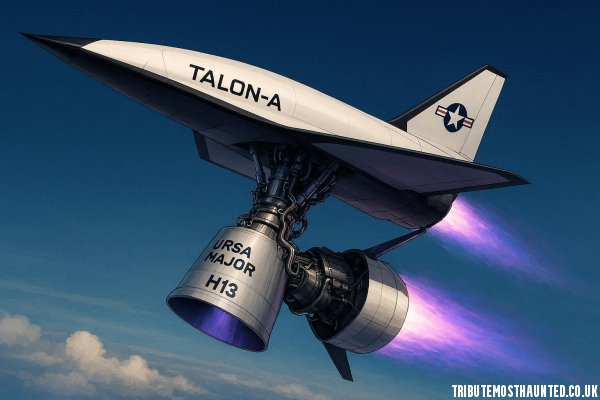
The Talon-A launch process is unlike traditional rocket launches.
Step-by-Step Launch Sequence
1. Captive Carry
Talon-A attaches beneath the center wing of the massive Roc aircraft.
2. Takeoff
Roc climbs to more than 20,000 feet.
3. Release
The vehicle separates over the Pacific Ocean.
4. H13 Engine Ignition
The Hadley H13 ignites and accelerates Talon-A to hypersonic speed.
5. Recovery
The vehicle glides to a runway landing at Vandenberg Space Force Base.
Future versions including TA-2 and TA-3 will feature even greater reusability and advanced landing systems.
Future of H13 Engines & Talon-A Beyond 2026
The Talon-A and H13 program is only beginning.
Upcoming Developments
Monthly Hypersonic Flights
Stratolaunch aims for a regular operational cadence.
Expanded Missile Defense Testing
The system will support the Missile Defense Agency.
Global Launch Operations
The company plans worldwide deployment using the Spirit of Mojave 747 carrier aircraft.
Ursa Major Expansion
Ursa Major plans to scale H13 production and support allied defense programs.
Final Verdict: Why H13 & Talon-A Are Changing Aerospace
The combination of Ursa Major’s H13 engines and Stratolaunch’s Talon-A has proven that reusable hypersonic flight is now practical, affordable, and scalable.
The program delivers:
- Mach 5+ reusable flight
- Lower hypersonic testing costs
- Rapid mission turnaround
- Advanced military testing capability
- Modern 3D-printed propulsion systems
The first successful flight in March 2024 was only the beginning. By 2026, Talon-A and H13 are reshaping the future of hypersonic technology and giving the United States a major strategic advantage in one of the world’s most important aerospace races.
FAQs About H13 Engines & Talon-A
What is Talon-A?
Talon-A is a reusable hypersonic test vehicle developed by Stratolaunch capable of sustained Mach 5+ flight.
Who makes the H13 engine?
The H13 engine is built by Ursa Major Technologies.
How fast is Talon-A?
Talon-A reaches speeds above Mach 5, over five times the speed of sound.
Why is Talon-A important?
It lowers hypersonic testing costs while supporting military and commercial research.
Is Talon-A reusable?
Yes. Talon-A is designed for reusable runway recovery missions.