


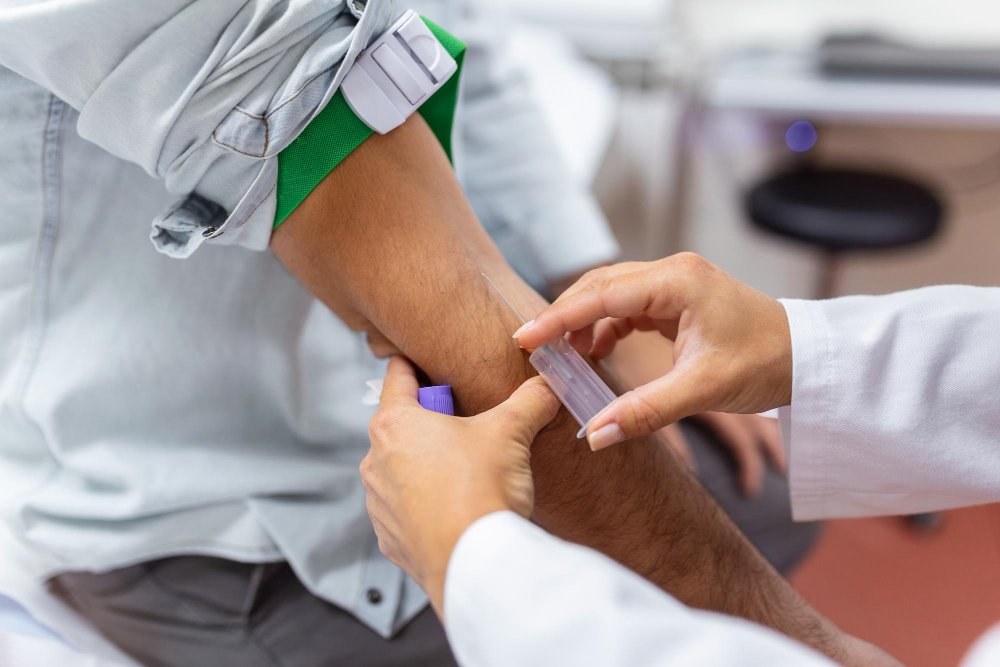
If you’re looking to train as a phlebotomist or are new to the phlebotomy career, you need to know some of the common mistakes beginner phlebotomists make. Not learning from these mistakes can cause a lot of patient bleeding, discomfort and pain.
In this guide, we will walk through 5 mistakes that new phlebotomists make. We will also give you special tips on how to avoid them.
1. Not Anchoring The Needle Properly
One of the biggest mistakes that beginners make is not having a firm grip on the needle device while on the arm. This causes one of three things :
- You might accidentally pull the needle out if you look away to grab tubes or remove them.
- You might accidentally push the needle in too far when inserting tubes. This can go through the vein (transfixation) and may damage nearby structures like nerves or tendons.
- Moving the needle around under the skin can damage the vein and cause more pain to the patient.
How to avoid it
- Use a firm and confident hold on the needle.
- Rest your hand on the patient’s arm for stability.
- Practice on training pads or fruits to build control.
We cover all the basics of phlebotomy that you need to know in our Phlebotomy Training London Course. It’s a 1-day practical training that teaches you core phlebotomy techniques and opportunity to perform real blood draws with consent in a face-to-face classroom setting. Learn directly under experienced medical trainers. This course is accredited by the Continuing Professional Development and is accepted by all healthcare employers.

2. Not Focusing On The Patient
It is important to make sure the patient is relaxed, as it directly impacts their veins and circulation. And if they move a lot, there is a high chance that you will hit the wrong nerve. This is why you should place equal focus on the technique as well as the patient.
How to avoid it:
- Start by practising on manikin arms (these will be provided to you in the training mentioned earlier).
- Have an experienced practitioner with you when working with real patients.
- Try to divert their mind away from the blood draw by having small talk with them.
3. Mixing Up The Order Of Steps
Many beginners get the sequence wrong. For example, they often make the mistake of removing the tourniquet at the very end when it should be removed first.
How to avoid it:
- Remember the order of things till it feels automatic.
- Don’t immediately remove the needle after the tourniquet is off. Let the blood recirculate before you remove the needle. This will reduce bruising in the area.
4. Poor Setup And Positioning
Not having your equipment in place can make the blood draw more difficult for you. This could include, for example, forgetting to bring the sharps bin close. The RUH Bath NHS guidelines advise that equipment, such as sharps containers, should not be taken into isolation rooms if you will need to remove them again, as they should already be available in the room.
How to avoid:
- Set everything up before you start.
- Keep all equipment within easy reach.
- Make sure your sharp bin is nearby.
5. Using The Tourniquet Incorrectly
When starting out in phlebotomy, many phlebotomists loosely tie the tourniquet because they do not want to hurt the patient. They either be too gentle with the tourniquet or make it too tight. Keeping the tourniquet loose does not allow the veins to fill with blood properly. On the other hand, making it tight can make the patient uncomfortable.
How to avoid:
- Aim for firm but comfortable tension.
- Learn from an experienced trainer.
If you want to learn advanced phlebotomy techniques, join our 3-day CPD-accredited Advanced Phlebotomy Competency Course in London. This is also a face-to-face course where you will learn advanced practical techniques, including tourniquet techniques, from experienced trainers. By the end of it, you get a special Certificate of Competency and a Recommendation Letter from trainers confirming to others that you are competent in blood draws.
Conclusion
These mistakes usually happen when the phlebotomist is not well-trained. Those who train under qualified trainers hardly make these mistakes. So, make sure to complete a course with qualified trainers and then keep refining your skills till it becomes automatic.