


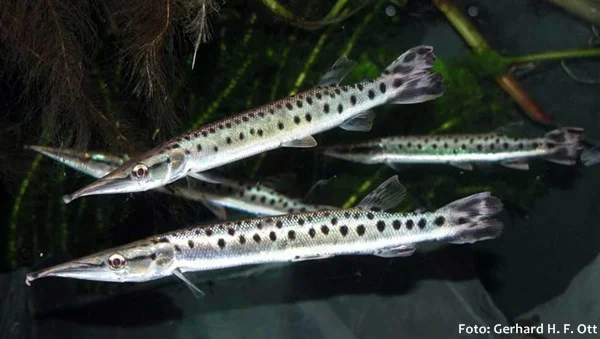
The spotted gar pike is one of the most fascinating and misunderstood freshwater fish in North America. Often called a “living fossil,” this species has survived nearly unchanged for millions of years. With its armored body, elongated snout, and sharp teeth, the spotted gar looks more like a prehistoric creature than a modern fish.
What Is a Spotted Gar Pike?
The spotted gar pike (Lepisosteus oculatus) is a freshwater fish species belonging to the gar family (Lepisosteidae). Despite the name “pike,” it is not a true pike. The nickname comes from its long, slender body and predatory behavior, which resemble pike species.
What truly sets the spotted gar apart is its thick, diamond-shaped ganoid scales, which act like natural armor. These scales are incredibly tough and were historically used by Native Americans as arrowheads and tools.
Another unique feature is its dual breathing ability. In addition to gills, the spotted gar can gulp air and absorb oxygen through a specialized vascularized swim bladder. This allows it to survive in low-oxygen waters where many fish cannot.
The spotted gar is generally non-aggressive toward humans and plays an important ecological role, despite its fearsome appearance.
Natural Habitat and Geographic Distribution
The spotted gar pike is native to North America, primarily found in the Mississippi River basin and parts of the Great Lakes and Gulf Coast drainage systems.
Typical habitats include:
- Slow-moving rivers
- Backwaters and oxbow lakes
- Swamps and bayous
- Vegetated lakes and reservoirs
Spotted gars prefer warm, shallow waters with plenty of aquatic vegetation, which provides cover for ambush hunting. They are especially common in waters with muddy or sandy bottoms.
Because they can breathe atmospheric air, spotted gars thrive in environments that experience seasonal oxygen depletion, such as stagnant summer waters. This adaptability has helped the species survive environmental changes that wiped out less resilient fish.
Physical Characteristics and Identification
The spotted gar pike is easily recognizable once you know what to look for. It is considered a medium-sized gar, typically growing between 2 to 3 feet long, though some individuals grow larger.
Key identifying features include:
- Dark round spots on the head, body, and fins
- Long, narrow snout filled with sharp, needle-like teeth
- Olive-brown to greenish coloration
- Heavy, armor-like scales
Unlike the longnose gar, the spotted gar has a shorter and broader snout, and its spots are more pronounced and evenly distributed.
These physical traits make the spotted gar an efficient ambush predator, perfectly adapted to lying motionless before striking prey with lightning speed.
Diet and Feeding Behavior
The spotted gar pike is a carnivorous predator with a diet that reflects its role as a top-level fish hunter.
Primary food sources include:
- Small fish (shad, minnows, sunfish)
- Crustaceans
- Insects and larvae
- Occasionally amphibians
Rather than chasing prey, spotted gars use a sit-and-wait hunting strategy. They remain still among vegetation and strike suddenly, impaling prey with their sharp teeth.
Despite myths, spotted gars do not decimate sport fish populations. Studies show they primarily consume abundant forage fish, helping maintain ecological balance by controlling overpopulated species.
Reproduction and Life Cycle
Spotted gar reproduction is closely tied to seasonal flooding and water temperature. Spawning usually occurs in spring, when rising water levels flood shallow, vegetated areas.
Key reproductive traits:
- Females lay thousands of eggs
- Eggs are toxic to predators
- Eggs stick to vegetation and rocks
- No parental care after spawning
Young gars hatch quickly and grow slowly, benefiting from their protective scales even at an early age. Spotted gars are long-lived, with some individuals reaching 20 years or more in the wild.
This slow growth and late maturity make them vulnerable to overfishing and habitat loss, even though they are hardy fish.
Importance in Ecosystems and Human Perception
The spotted gar pike plays a critical role in maintaining healthy aquatic ecosystems. As an apex or near-apex predator, it helps regulate prey populations and supports biodiversity.
Unfortunately, gars have long suffered from negative public perception. They were historically labeled as “trash fish” and targeted for eradication due to misunderstanding of their ecological role.
Modern research and conservation efforts now recognize the spotted gar as:
- A keystone species
- An indicator of wetland health
- A valuable part of native biodiversity
Today, spotted gars are increasingly appreciated by biologists, anglers, and conservationists for their evolutionary history and environmental importance.
Conclusion
The spotted gar pike is a remarkable survivor from Earth’s distant past, perfectly adapted to modern freshwater ecosystems. With its prehistoric armor, unique breathing ability, and important ecological role, it deserves respect rather than fear.
Understanding and protecting species like the spotted gar helps preserve natural balance, biodiversity, and aquatic heritage. This ancient fish is not a menace—it is a living symbol of resilience and evolution.
Frequently Asked Questions
Is the spotted gar dangerous to humans?
No, it is not aggressive and poses no real threat to people.
Can spotted gar breathe air?
Yes, they can breathe atmospheric oxygen using a specialized swim bladder.
Are spotted gars good to eat?
The meat is edible, but the eggs are toxic and should never be consumed.
How old can a spotted gar get?
They can live 20 years or more in the wild.
Are spotted gar protected?
Protection status varies by state due to conservation concerns.